
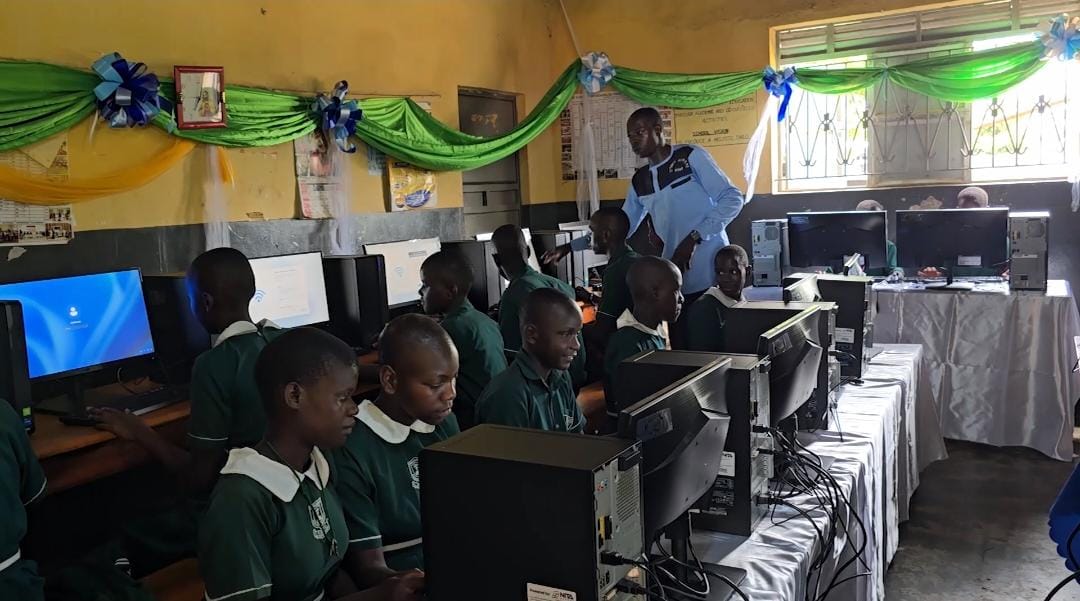
Education stakeholders in Mityana District have called on the Ministry of Education and Sports to introduce systems that regulate how learners access the internet while using computers distributed to schools under the government’s digital learning initiatives.
The appeal comes as the Government of Uganda intensifies efforts to modernise the education system by integrating technology into teaching and learning.
Across the country, authorities have rolled out several programmes aimed at promoting technology-driven learning in schools.
These include the distribution of computers to schools, expansion of internet connectivity, training of teachers in information and communication technology, and the gradual introduction of emerging technologies such as Artificial Intelligence to support teaching and learning.
Education leaders say the initiatives are intended to improve academic performance while narrowing the digital gap between urban and rural schools.
According to Maria Prossyscovia Nalyazi, the head teacher of St Theresa Primary School Mayirye, the introduction of technology in classrooms is designed to shift the education system from a purely theoretical model to one that equips learners with practical digital skills.
“The introduction of technology in schools is meant to help learners move beyond theoretical knowledge and acquire practical digital skills that can prepare them for future opportunities in the modern workforce,” she said.
However, despite welcoming the government’s efforts, teachers have raised concerns about unrestricted internet access in schools.
Educators warn that without proper safeguards, learners may end up accessing online content that is not related to their studies.
Julius Ojolim, a teacher at St Theresa Primary School Mayirye, said the government should introduce systems capable of guiding and controlling the type of online content learners can access on school computers.
“Technology is very important in education, but there should be systems that regulate internet use in schools so that learners only access information that supports their academic work,” he said.
Teachers also noted that while digital learning offers significant opportunities for improving education outcomes, more investment is required to train educators to effectively integrate technology into classroom teaching.
Ojolim said continuous professional training for teachers would ensure they are confident in using digital tools and able to guide students in using technology responsibly.
“Teachers also need continuous training in the use of digital tools so that they can effectively guide learners and maximise the benefits of technology in education,” he added.
Education stakeholders say that with proper regulation of internet access and sustained investment in teacher training, Uganda’s digital learning programmes could significantly improve learning outcomes and better prepare students for the demands of an increasingly technology-driven world.
